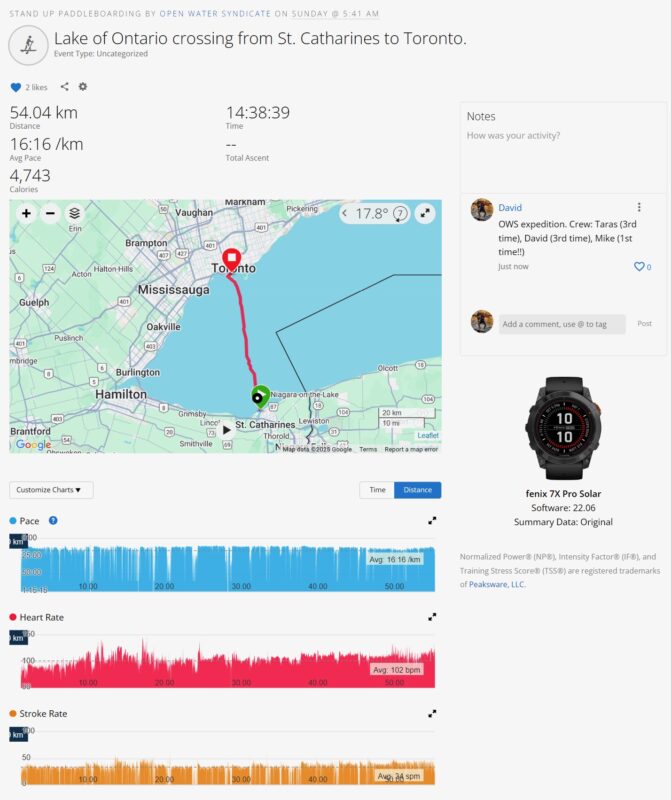

Third Expedition – Lake Ontario Crossing
From St. Catharines to Toronto – Summer 2025
For our third crossing, we returned to the familiar route from St. Catharines to Toronto, but this time it felt different from the start. Armando couldn’t join us, and instead, Mike became part of the team.
We agreed to meet downtown at 3 a.m. The streets were quiet, just a few lights and the sound of delivery trucks in the distance. Dave had booked an Uber to take us directly to Port Dalhousie, so we loaded our boards and gear and started the ride. No one said much — everyone was focused on what lay ahead.
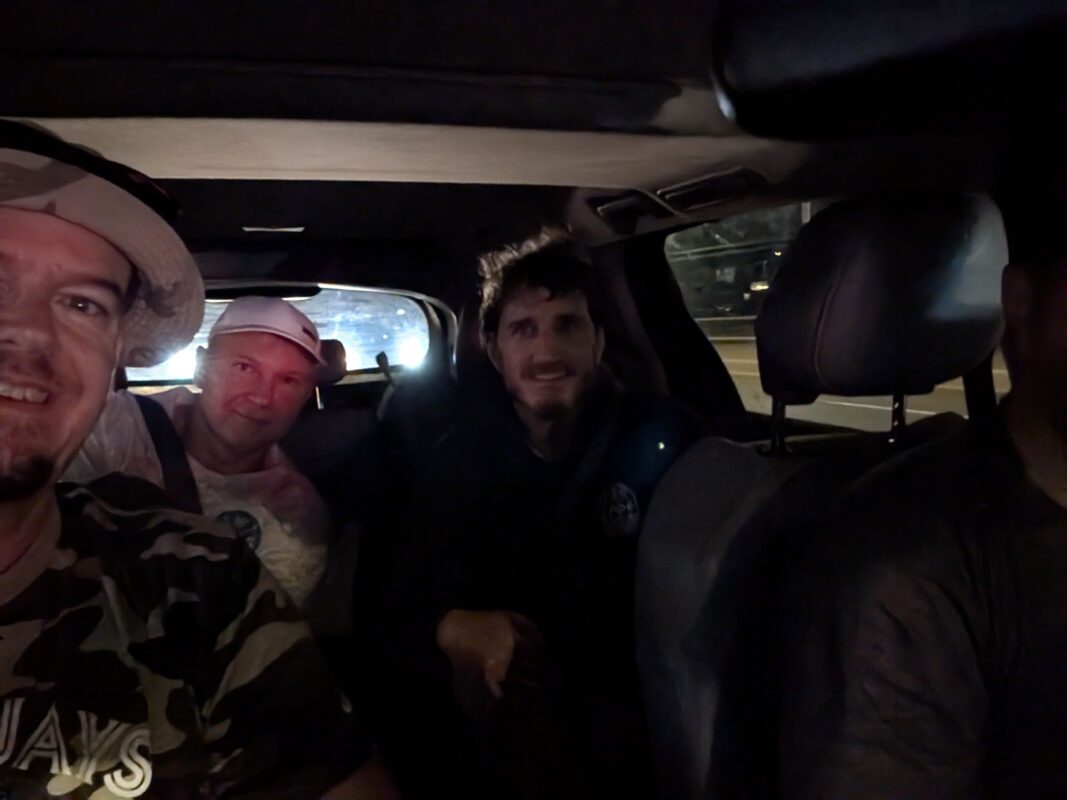
We arrived before dawn. The sky was dark but clear, the air warm, and the lake moved steadily with small waves rolling from the shore toward open water. We inflated the boards, tightened our gear, checked the route, and prepared to launch. The goal was simple: make the full crossing before nightfall.
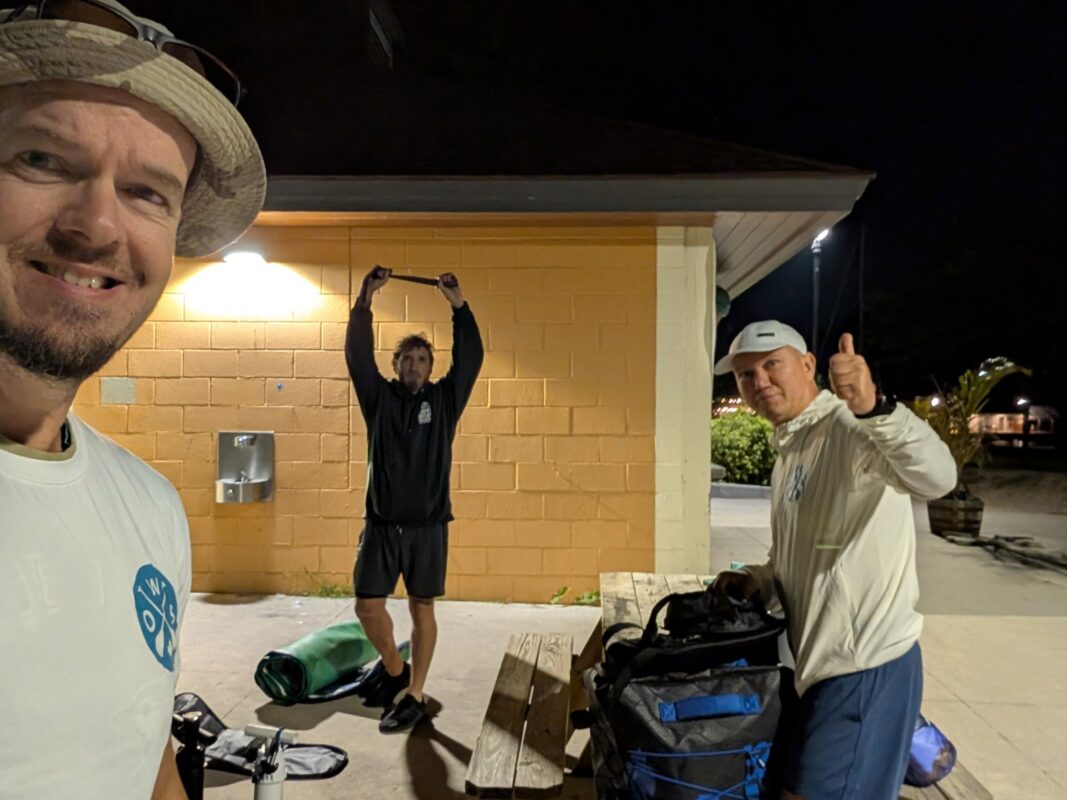
The wind was blowing toward Toronto, but the current pulled diagonally toward the U.S. border, forcing us to correct course right away. The boards picked up good speed, and progress came quickly. We passed a large cargo ship sitting at anchor and tied off briefly to a buoy for a quick breakfast and water. Twenty minutes later, we were back on the move.
The side wind started early — and it never stopped. From the first few kilometers, it kept pressing from the south, pushing us off our line and forcing constant correction. For the next eight to ten kilometers, we couldn’t stop at all. Every pause sent us drifting south, deeper toward the middle of the lake. The plan to rest disappeared. We switched to kayak mode and paddled continuously.
The lake was restless, never quiet. The wind built small, sharp waves that slapped against the boards, breaking any rhythm we tried to hold. Each correction took effort, every stroke mattered. The hours blurred together — steady paddling, checking bearings, adjusting angles, keeping the nose pointed east.
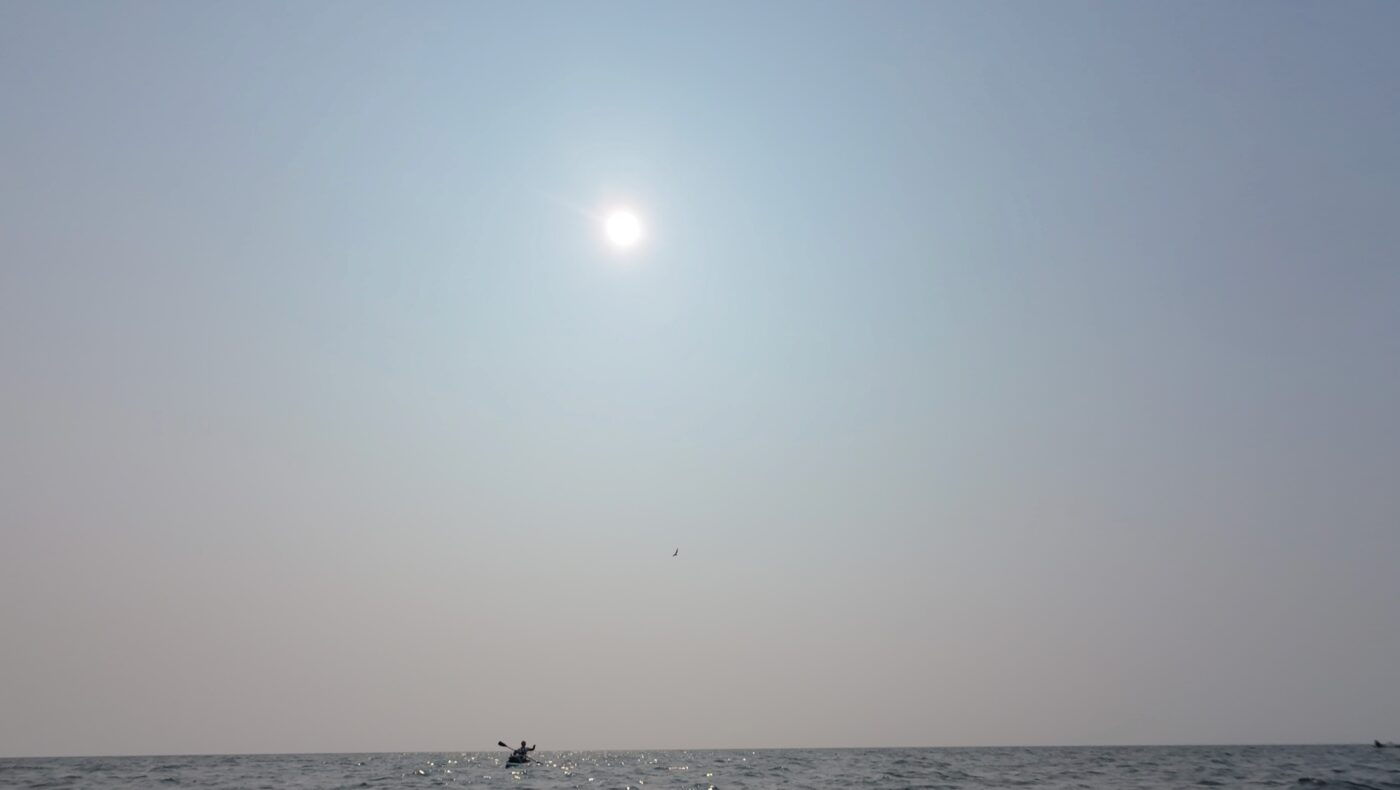
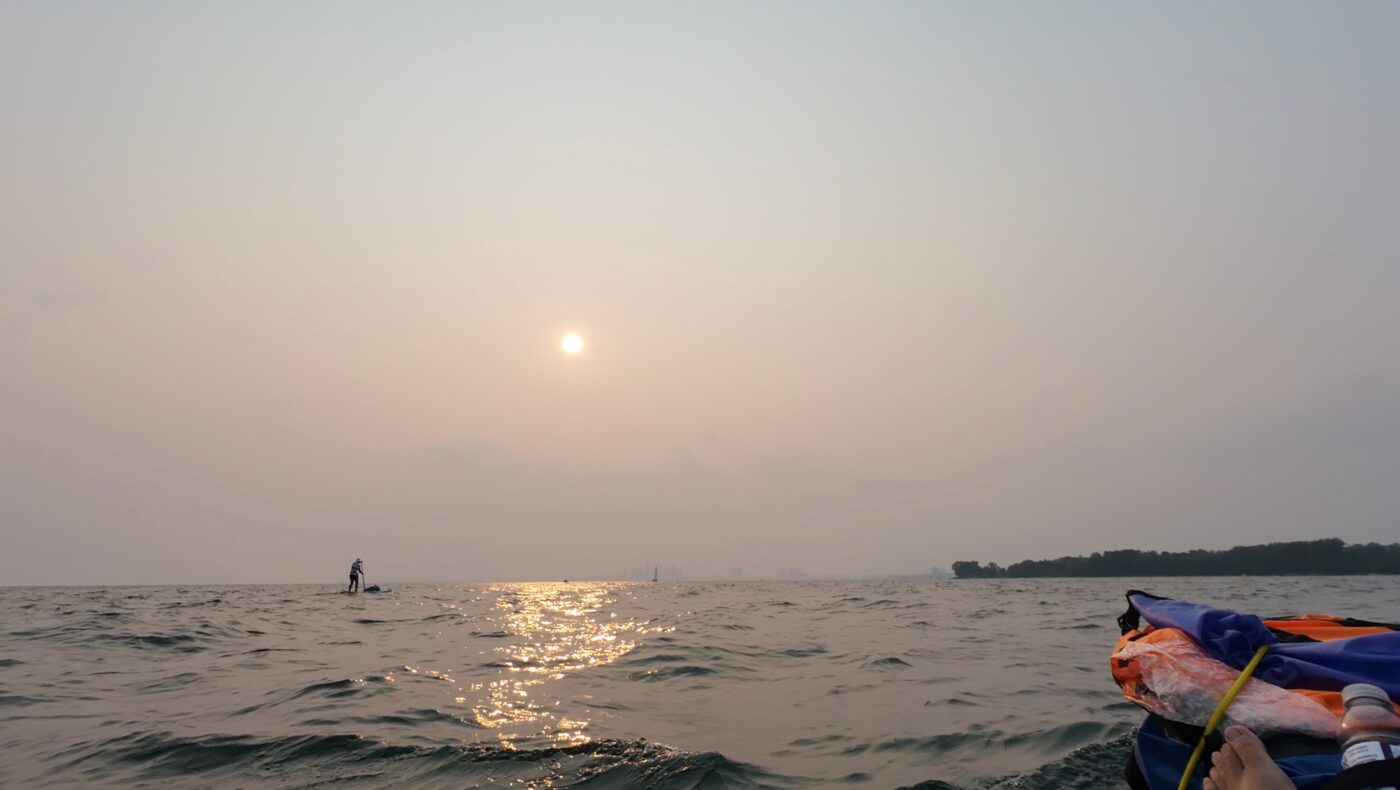
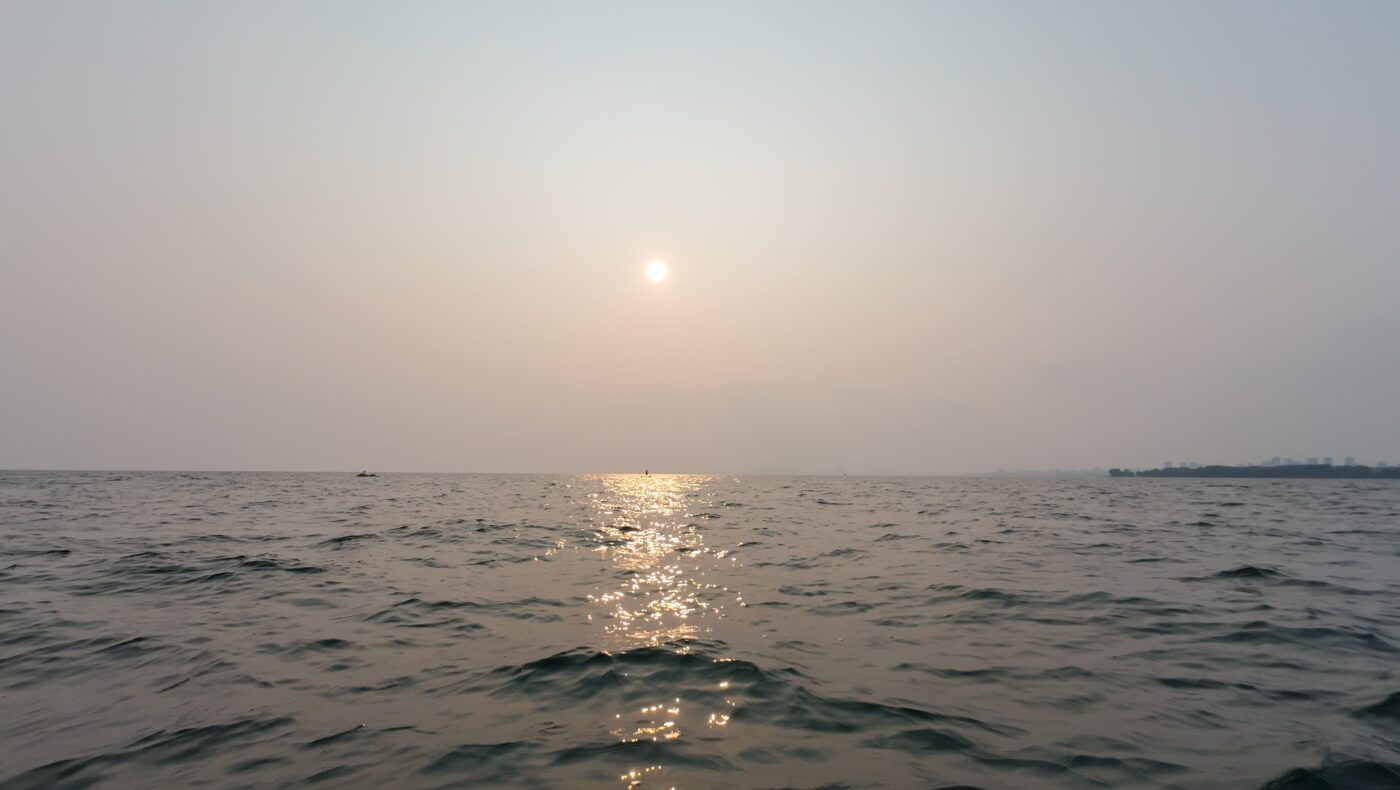
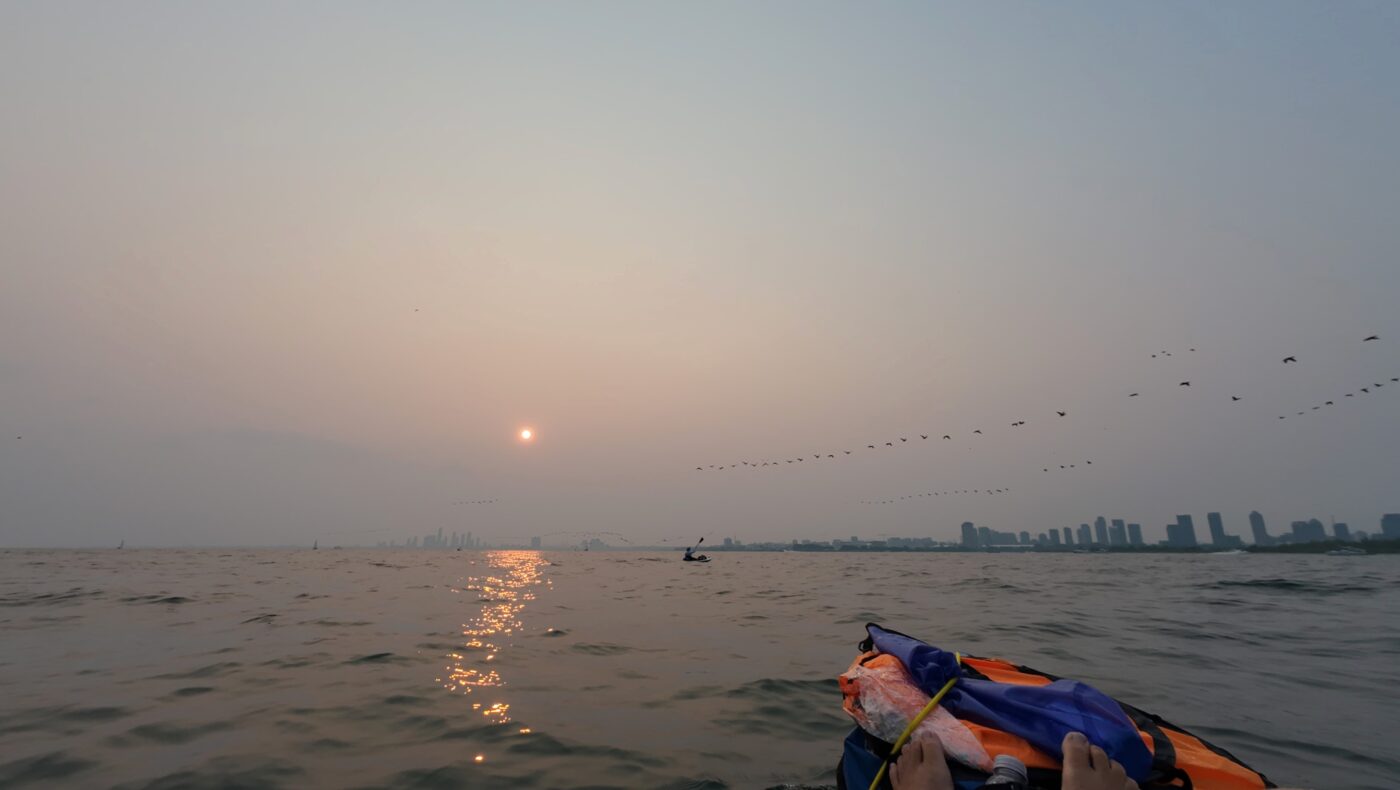
After about two hours, we lost all visual contact with land. The haze from Ontario’s summer fires made it worse; everything beyond a few hundred meters disappeared. For nearly eight hours we relied entirely on electronics — GPS and the compass on the Garmin watch — to keep our direction.
“Are we going in circles?” Mike asked at one point. The GPS said no, but it was hard to believe. The smoke made the horizon blend into the water, and without any visual reference, the feeling of progress faded. Still, we kept moving, stroke after stroke.

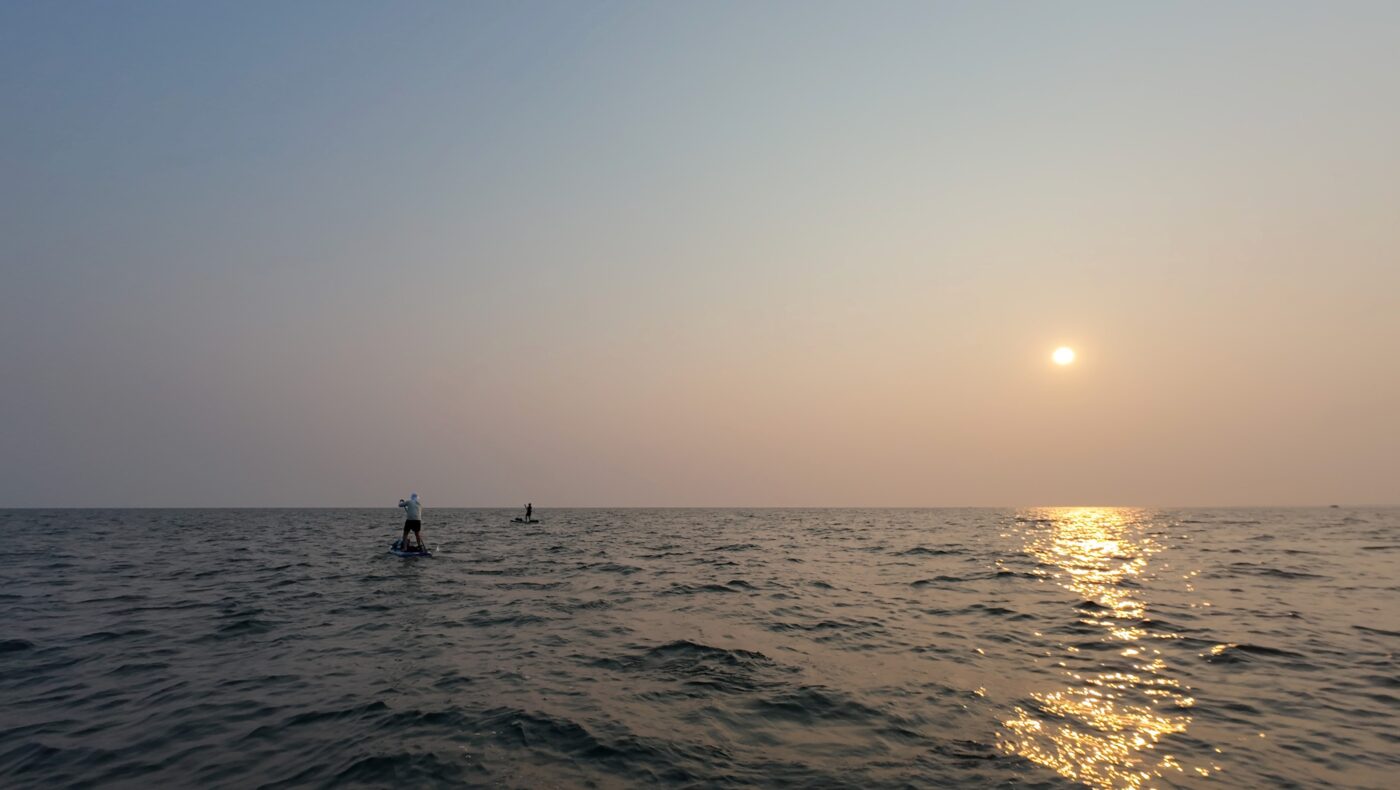
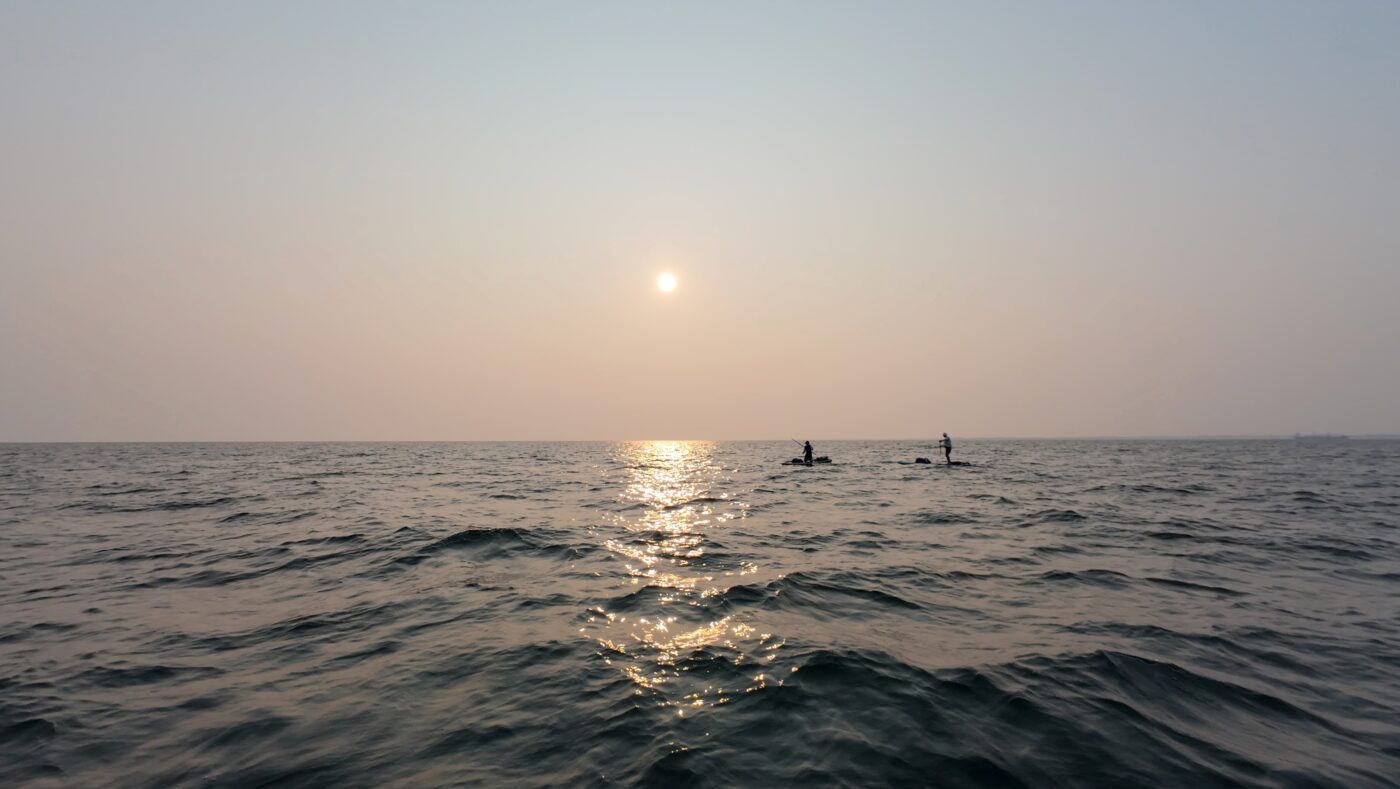
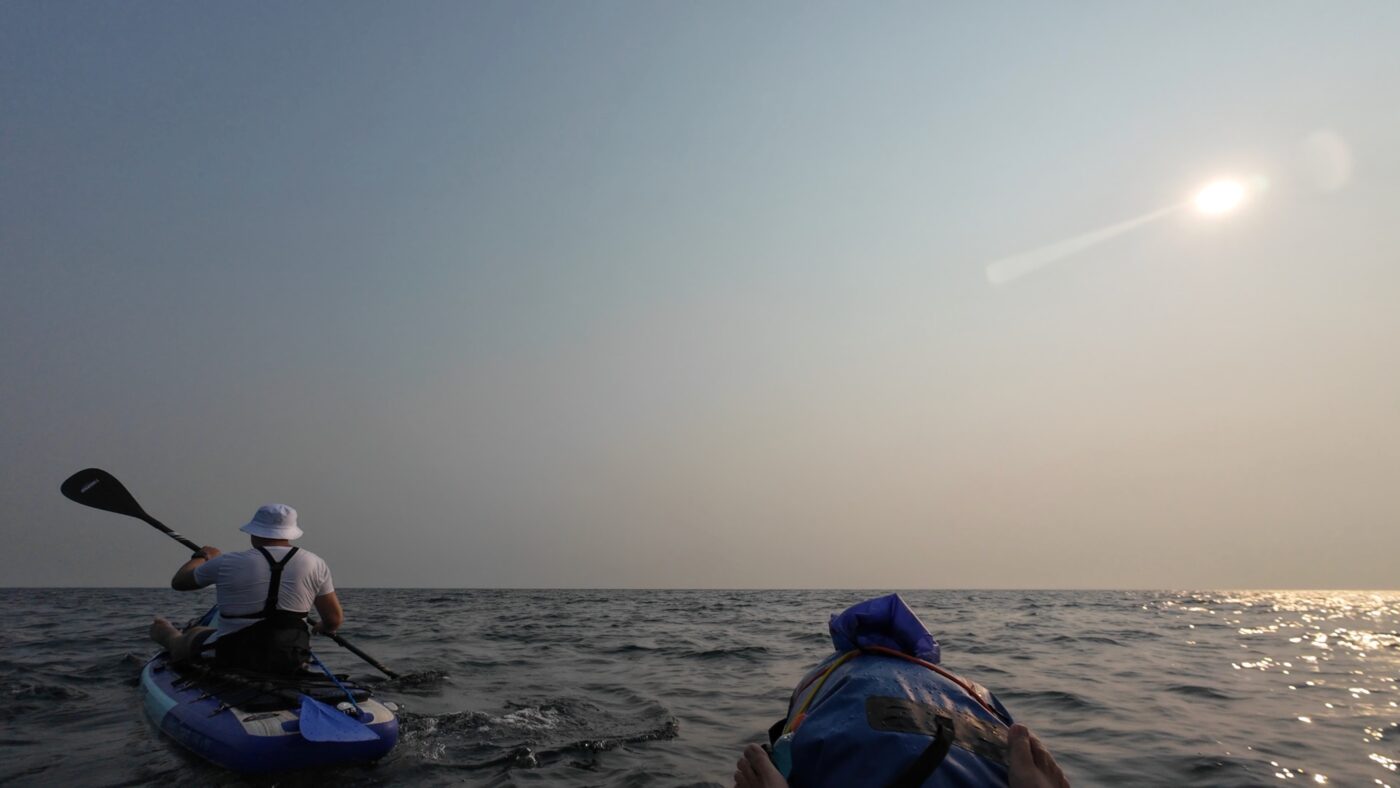


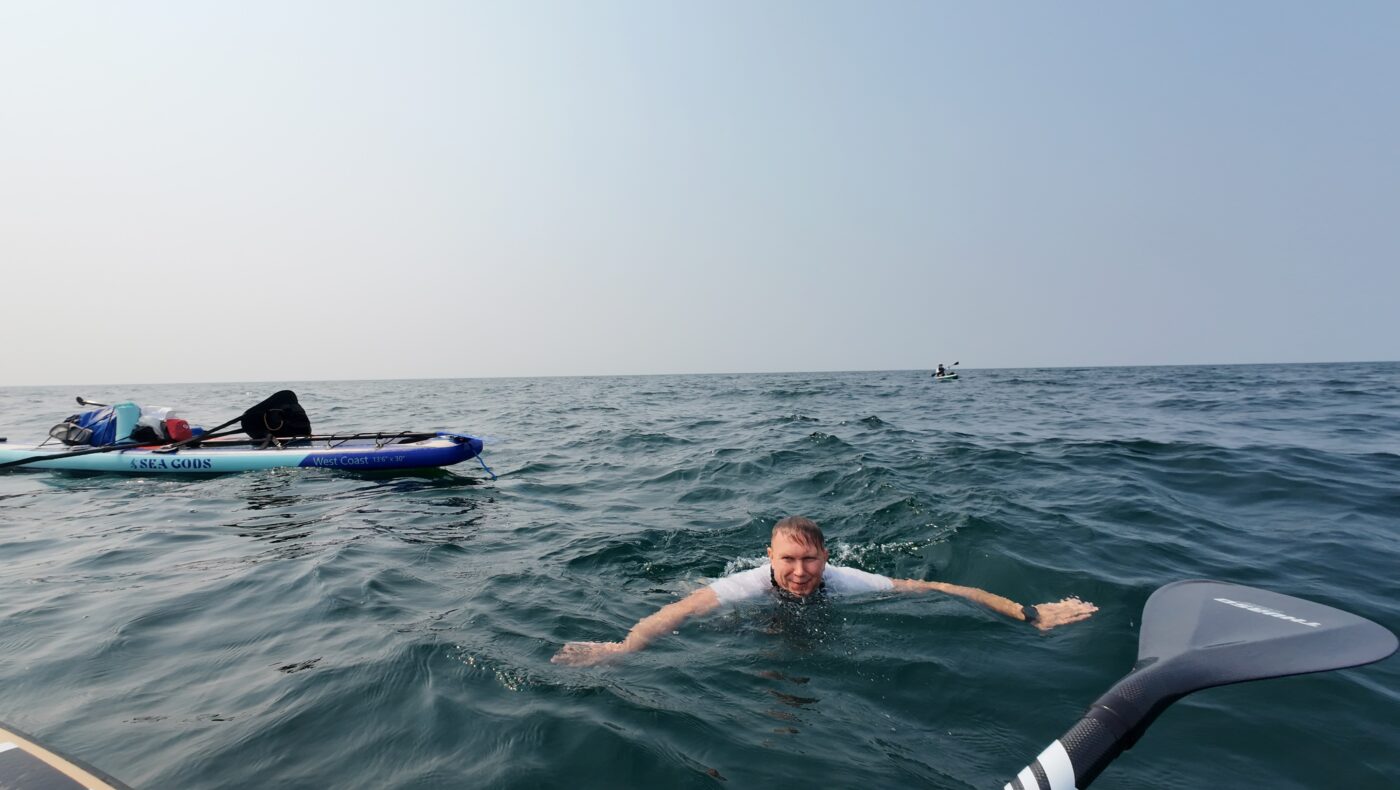
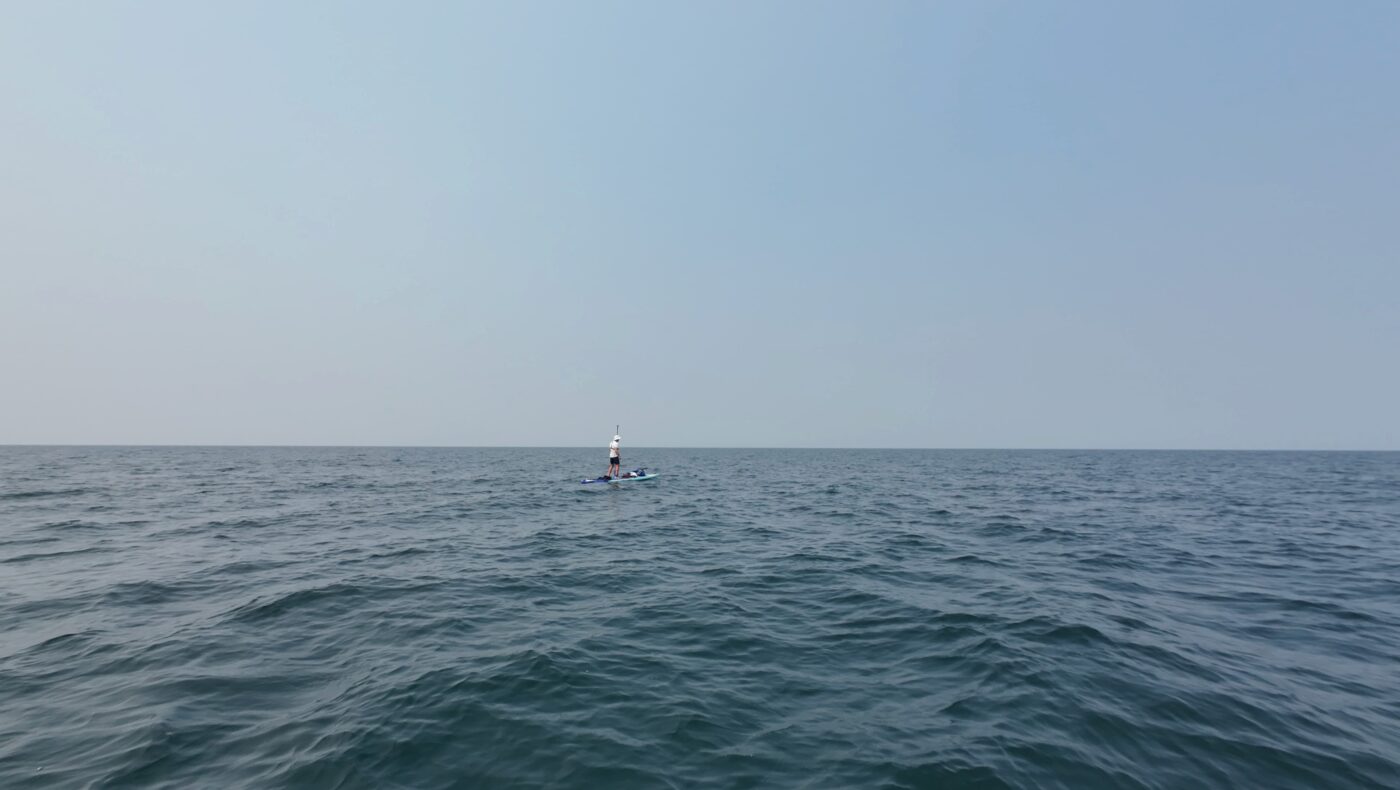
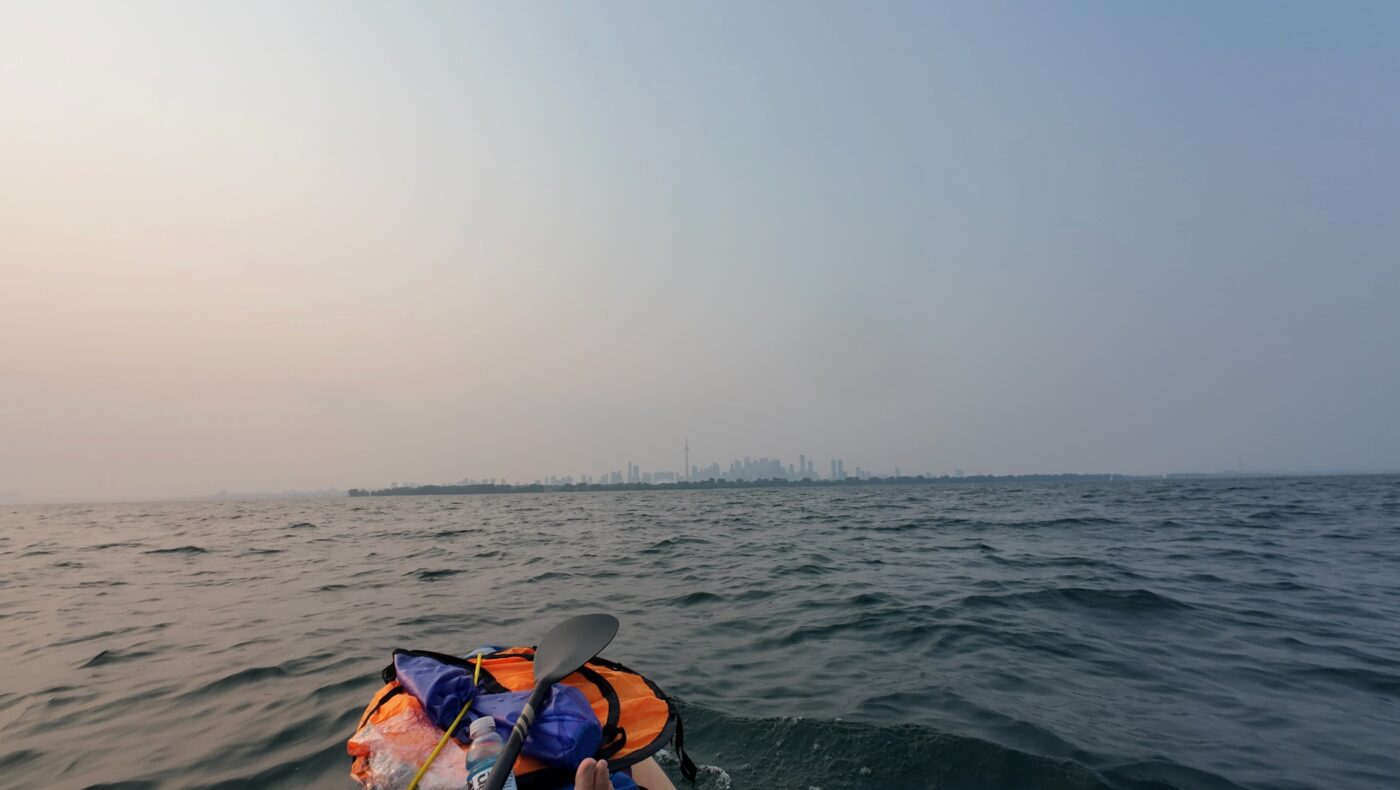
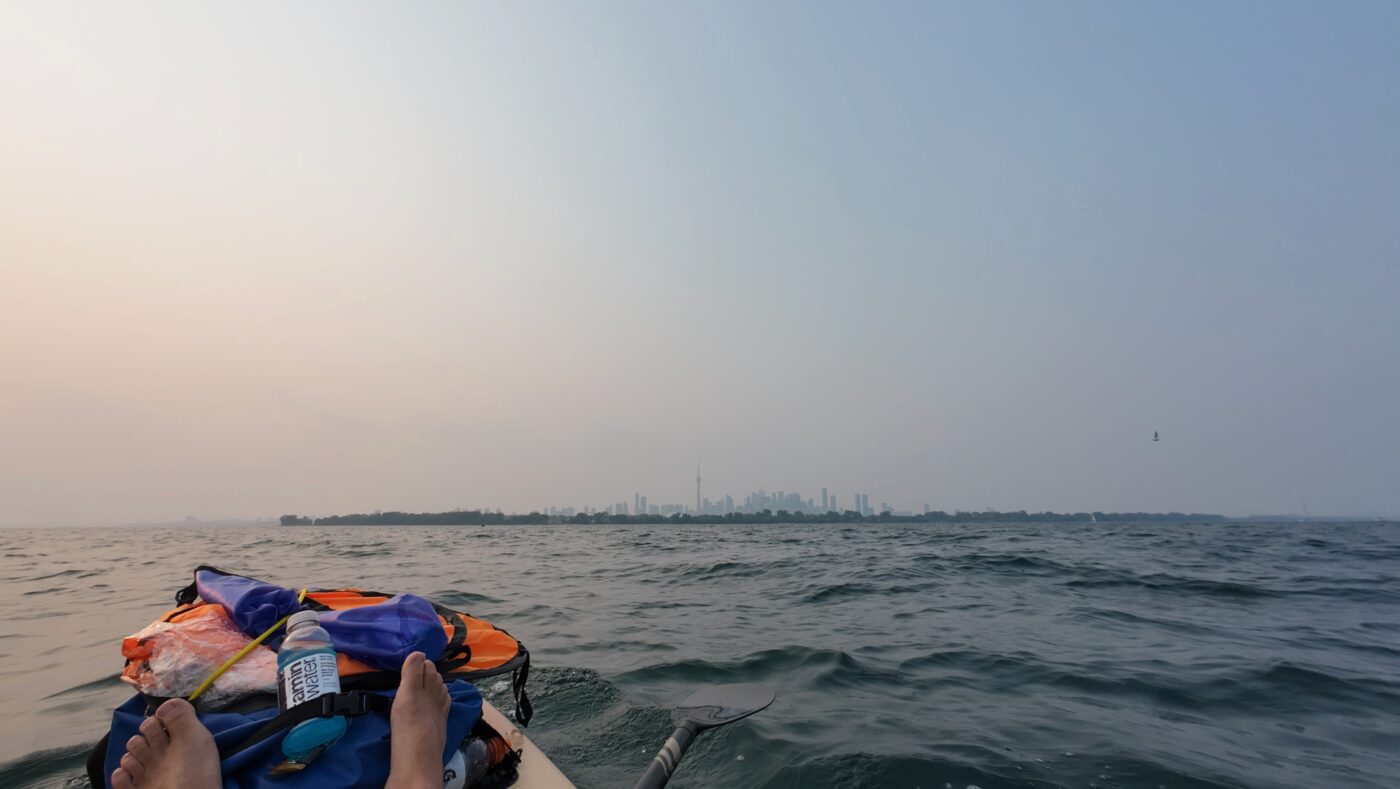
Then, finally, the CN Tower appeared — faint, small, and distorted by haze — but real. That single sight changed everything. Energy came back instantly. We knew where we were heading.
The side wind continued, pushing us toward Scarborough, and for the last stretch around Toronto Island, it turned into a full headwind. The final five kilometers were pure resistance — heavy arms, sore backs, slow movement. Every meter felt earned.
A sailboat passed close by, the crew calling out to wish us luck before disappearing toward the harbor.
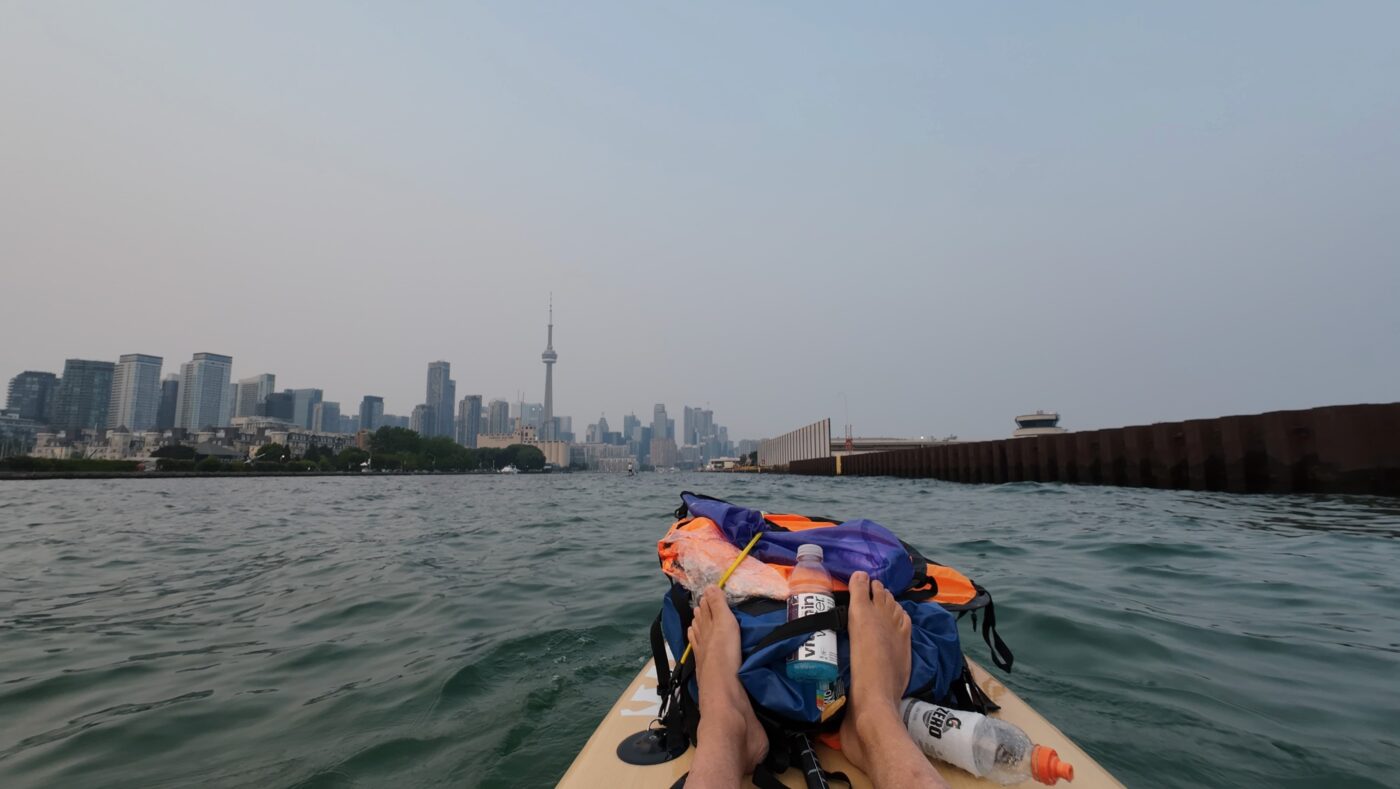
After more than thirteen hours on the water, we finally reached the south side of Toronto Island. We were close, but not done. The last few kilometers against the wind demanded everything we had left. Everyone was exhausted, but we kept pushing toward the Redemption Channel.
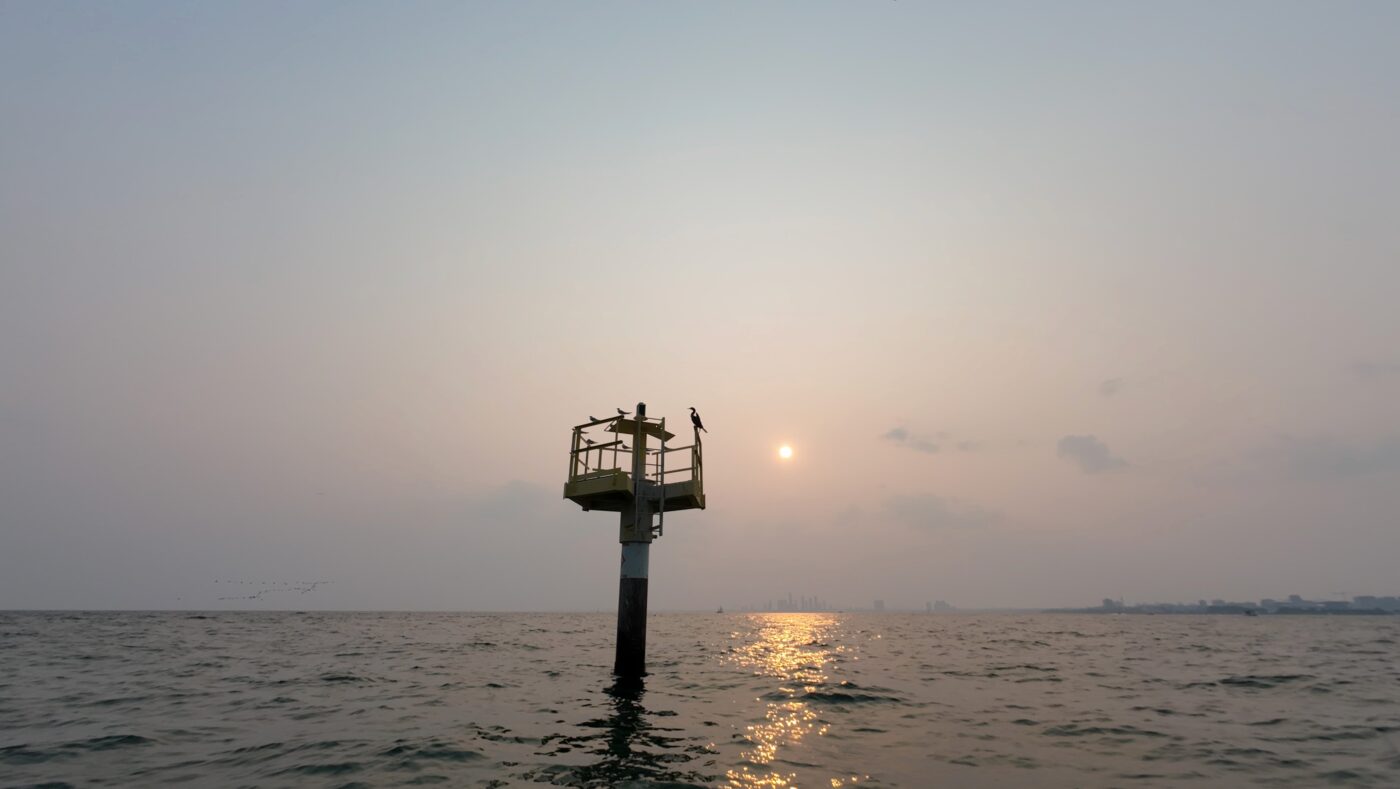
Just before the entrance, Mike drifted too close to the buoys. A police boat pulled up, asking if he wanted to pay a ten-thousand-dollar fine. Mike looked up and said, “Not really,” before continuing to paddle.
The channel was busy and wavy, but we stayed steady and pushed through the final stretch, one stroke at a time.
We reached Marina Quay West around 7 p.m. The light was still strong, the city calm. We pulled the boards onto the dock, sat down, and let the silence sink in.
That was the end of our third Lake Ontario crossing — about fifty-four kilometres, more than fourteen hours of steady side wind and a hard headwind finish. It wasn’t the hardest crossing because of distance — it was hard because the lake never gave us a break. It demanded constant effort, full focus, and patience from the first stroke to the last.